





2026-08-26
Board-to-Board Connector Types for Reliable Industrial Control Cabinets
View More


 FPC/FFC Connector
Board to Board Connector
Wire to Board Connector
Flexible Flat Cable
RF Connector
I/O Header
FPC/FFC Connector
Board to Board Connector
Wire to Board Connector
Flexible Flat Cable
RF Connector
I/O Header
Product
Automotive
Product
 141091-211260
 Consult

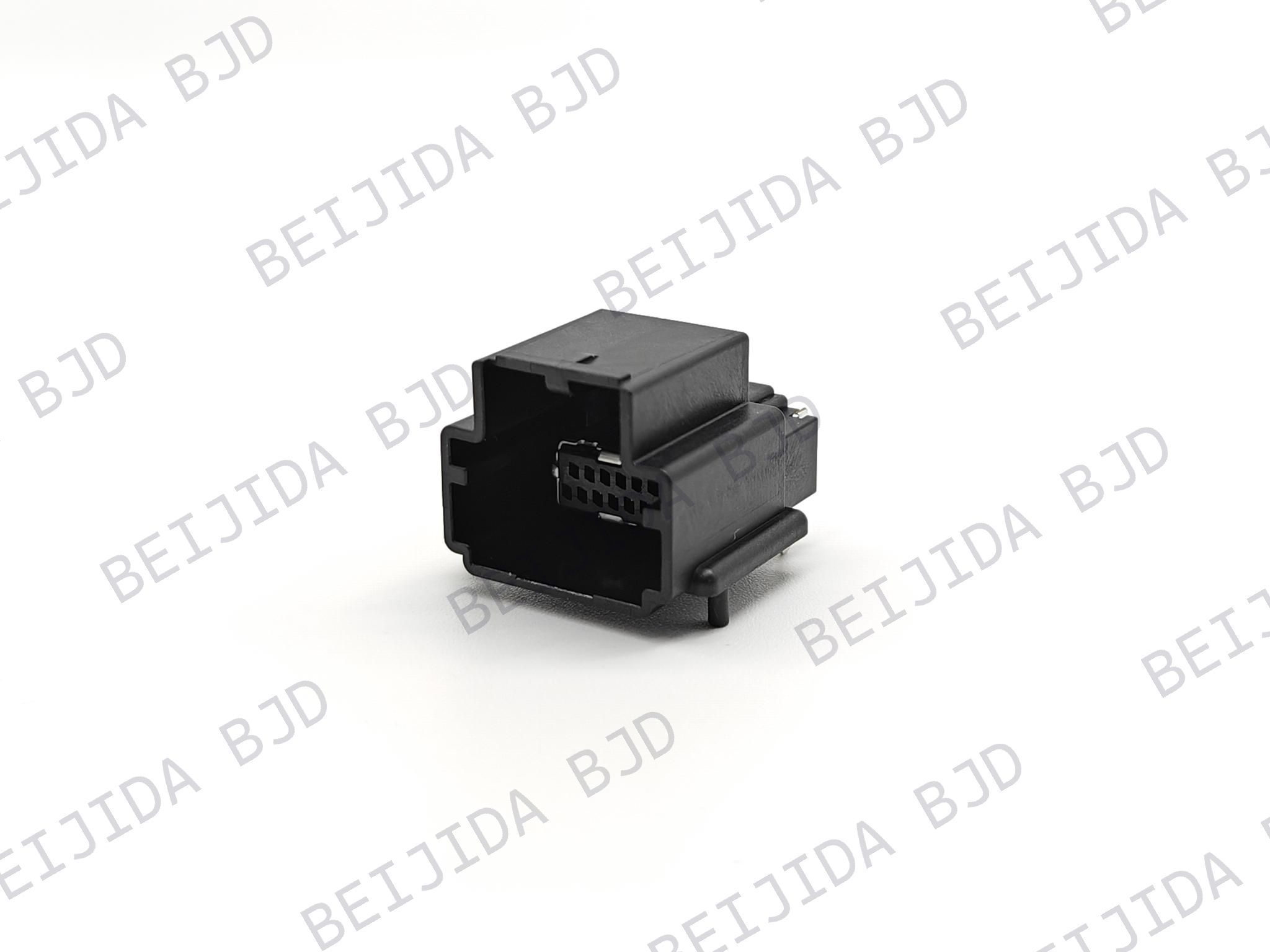
RAST connectors were originally developed for the household-appliance market and have since become a widely used standardized connection system. Early versions used crimp contacts, while many current designs use insulation displacement contact (IDC) technology. IDC termination can simplify assembly by eliminating separate wire-stripping and crimping steps while helping reduce wiring and mating errors.
Depending on the connector design, a RAST plug can mate directly with a printed circuit board edge or with a PCB-mounted header. Contacts are preassembled in the housing, reducing the number of loose components that must be handled during production and lowering the risk of wires being terminated in the wrong position.
The RAST standard originated in the 1980s through a European working group of household-appliance manufacturers and connector suppliers. Participants included Bosch, Miele, Siemens Home Appliances, AEG/Electrolux, Bauknecht/Whirlpool, Lumberg, Molex, AMP/TE Connectivity, Stocko Contact, and Wieland Electric.
The group aimed to prevent incorrect mating, reduce wiring errors during product assembly, and consolidate multiple connections into a smaller number of connector housings and cable assemblies. Although RAST was developed for white goods, it later expanded into heating equipment, industrial systems, and automotive applications. Flame-resistant designs developed for unattended appliances can also be relevant where automotive systems require robust material performance.
RAST is derived from the German term Raster Anschluss Steck Technik, commonly translated as “grid connection plug technology.”
RAST connectors are used across consumer, automotive, and industrial markets.
In household appliances, typical applications include washing machines, dryers, refrigerators, dishwashers, ovens, and small appliances. Automotive uses include HVAC systems, electric-vehicle subsystems, interior lighting, headlamps, and sensors. In industrial equipment, RAST connectors can provide direct or indirect connections for sensors, switches, actuators, and motor-control wiring.