






2026-10-30
How to Choose a Floating Board to Board Connector
View More


 FPC/FFC Connector
Board to Board Connector
Wire to Board Connector
Flexible Flat Cable
RF Connector
I/O Header
Product

Automotive
Product
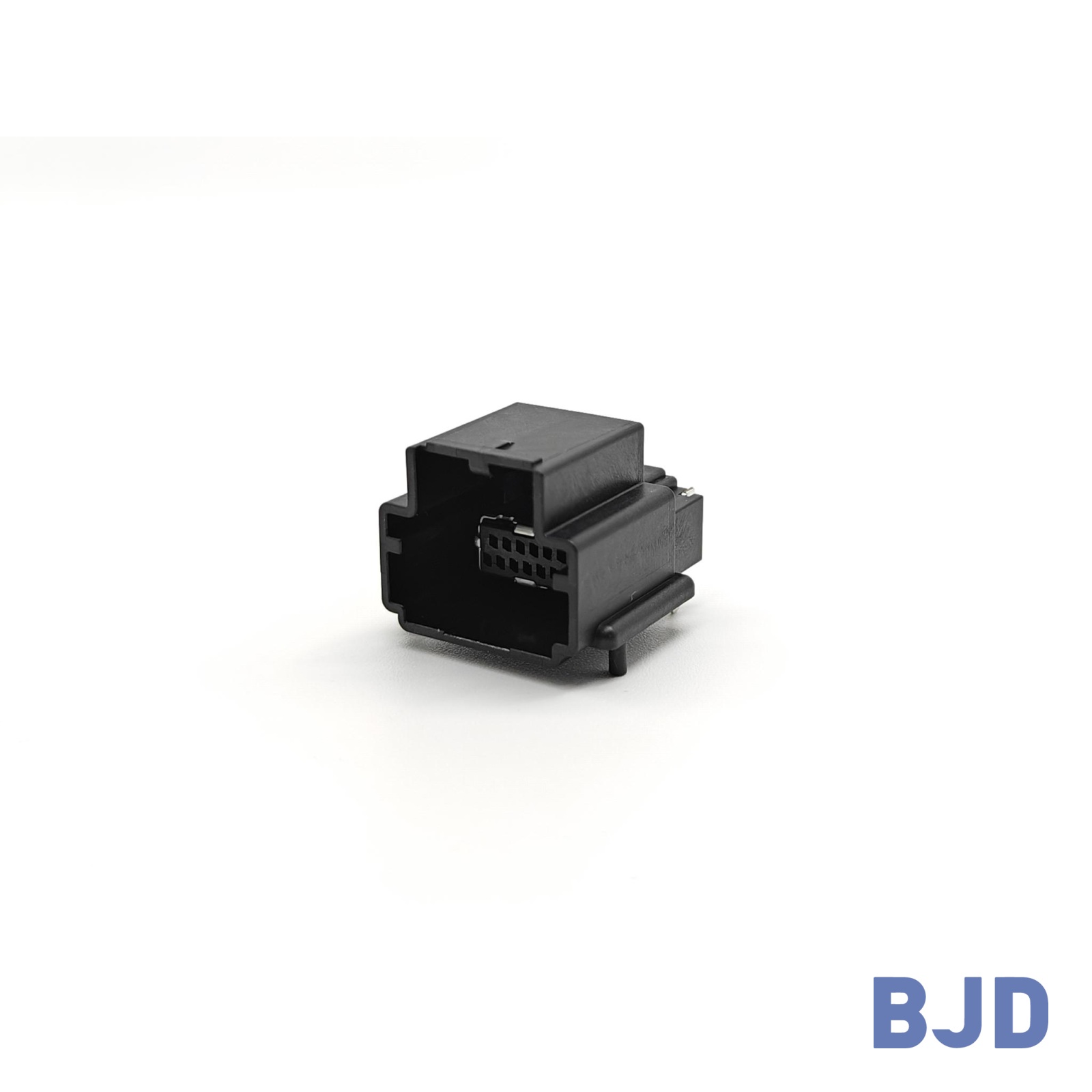 141091-211260
 Consult

How can you find a reliable board to board connector supplier that can meet your PCB design requirements, maintain consistent product quality, and support long-term production? The right choice depends on more than connector dimensions or unit price. Product compatibility, manufacturing capability, technical support, and supply stability all influence the success of an electronic assembly.
These considerations are particularly important in automotive electronics and other applications that require compact PCB layouts and dependable electrical connections. At Automotive World 2026, taking place from November 25–27 at Aichi International Exhibition Center (Aichi Sky Expo) in Nagoya, Japan, visitors can explore our automotive connectors, FPC/FFC connectors, and board-to-board connector solutions at Hall C, Booth N2-14.
A board to board connector supplier provides interconnect solutions that allow two printed circuit boards (PCBs) to connect directly without a separate cable assembly. These connectors are widely used in electronic equipment where space utilization, connection density, and assembly structure need careful consideration.
However, not every connector configuration suits every PCB design. A suitable supplier should offer options that accommodate different board layouts, electrical requirements, and mechanical structures.
Board-to-board connectors are available in different pitches, pin counts, mating heights, and connection orientations. Depending on the application, engineers may need vertical connections for parallel PCB stacking or right-angle configurations for boards arranged in different planes.
Floating board-to-board connectors provide another option when the assembly requires a defined degree of positional compensation between mating boards. Their suitability depends on the actual alignment tolerance and mechanical structure of the equipment.
When evaluating a supplier, review the available configurations rather than focusing on a single connector dimension. A broader range of options can make it easier to find a suitable match for the intended design.
The PCB layout determines how the connector fits into the overall assembly. Available space, board spacing, component placement, mounting direction, and enclosure dimensions all influence connector selection.
A compact design may prioritize fine pitch and a low mated height, while another assembly may require a greater floating range or higher current capacity. The connector should satisfy these requirements without creating unnecessary mechanical stress or complicating the assembly process.
For this reason, it is useful to work with a board to board connector supplier that can help evaluate the complete set of design requirements before a final selection is made.
Finding a suitable supplier requires more than comparing product catalogs. Buyers should assess whether the supplier can provide consistent products, support technical evaluation, and maintain dependable production as project requirements evolve.
Production consistency matters because small variations in connector dimensions, terminal positioning, or material properties can affect mating performance and PCB assembly.
When evaluating a manufacturer, ask about its production processes, inspection procedures, manufacturing capacity, and methods for controlling product variation. It is also important to understand how engineering changes and production revisions are managed.
These factors help buyers assess whether a supplier can support both initial sample evaluation and subsequent volume production.
A connector's specifications provide the starting point for evaluation, but product suitability also depends on validation against the intended application.
Review the available technical documentation, relevant test results, material information, and applicable quality requirements. For automotive and industrial projects, the validation plan should reflect the expected temperature range, vibration exposure, mating cycles, electrical loading, and other relevant operating conditions.
A reliable supplier should be able to clarify which specifications apply to a particular product and which additional tests may be necessary for the final assembly.
Technical communication becomes especially important when a standard connector does not fully match the PCB layout or mechanical structure.
A supplier's engineering team should be able to review requirements such as pitch, pin count, mating height, connection orientation, and floating range. Early discussion can also help identify potential conflicts involving PCB footprints, board alignment, or enclosure clearances.
Before committing to a design, confirm the available customization options, technical documentation, sample availability, and process for evaluating proposed changes.
Once the application requirements are clear, the next step is to match them with the connector's mechanical and electrical specifications. Each parameter affects a different part of the design, so selecting a connector by pitch alone is rarely sufficient.
Pitch describes the spacing between adjacent contacts, while pin count determines the number of available electrical connections. Mated height defines the distance between the two connected boards when the connector pair is fully engaged.
These parameters directly influence PCB space, routing density, and enclosure dimensions.
Our board-to-board connector range includes different pitches, pin counts, mating heights, and configurations. Options include fine-pitch connectors for compact designs and other configurations for assemblies with different spacing or electrical requirements.
When comparing products, confirm the complete mating pair and its dimensions rather than reviewing one connector half in isolation.
Current, voltage, and signal requirements must be considered alongside the physical layout. A connector intended for low-current signal transmission may not be suitable for a circuit with higher power demands.
Check rated current, rated voltage, contact arrangement, and any relevant transmission requirements in the product specifications. For high-speed applications, impedance, signal integrity, and PCB routing also need to be evaluated at the system level.
The correct choice depends on the actual electrical load and intended use. A connector with a higher rating is not automatically the best option if its dimensions or other characteristics do not suit the design.
Mechanical conditions can affect the stability of the connection throughout the product's service life. PCB misalignment, vibration, thermal expansion, and repeated mating can place stress on contacts and solder joints.
A floating connector may help accommodate a defined amount of positional deviation between mating boards. However, the required floating range should be based on the assembly's tolerance stack-up rather than selected simply because a larger range is available.
Operating temperature, mounting method, and mechanical support should also be reviewed. For additional guidance, our article on industrial-grade board-to-board connector reliability explains how these factors influence connector selection.
Price is an important purchasing factor, but the lowest unit cost does not necessarily produce the lowest overall sourcing cost. Product compatibility, assembly performance, lead time, and ongoing support can all influence the total cost of a project.
A connector that closely matches the design can help avoid unnecessary PCB changes, mechanical redesign, or additional assembly adjustments. Conversely, selecting an unsuitable configuration may create costs that exceed the initial price difference.
Compare suppliers based on the complete requirements, including connector dimensions, electrical performance, mating compatibility, and validation needs. Consider sample evaluation and any necessary design modifications before finalizing the purchasing decision.
Supply planning is another important part of supplier evaluation. Buyers should understand sample lead times, production schedules, order requirements, and the process for communicating changes that may affect delivery.
Clear technical communication is equally valuable. When specifications, drawings, or application requirements need clarification, timely responses help keep development and procurement activities aligned.
For long-term projects, also consider how the supplier manages product revisions, ongoing availability, and communication about changes that could affect the existing design.
Before mass production, evaluate representative samples against the actual PCB and mechanical assembly. Confirm dimensions, mating behavior, electrical performance, and assembly compatibility.
For demanding applications, validation may also include vibration, temperature cycling, contact resistance, and other tests relevant to the intended operating environment.
A successful sample evaluation does not replace production quality control. Buyers should also understand how the supplier maintains consistency between approved samples and subsequent production batches.
At BJD, we provide connector solutions for different electronic applications, including automotive electronics and industrial equipment. Our product portfolio covers board-to-board, FPC/FFC, wire-to-board, RF, and other connector categories.
Established in 2004, we have developed a range of connector products to address different mechanical layouts and electrical requirements. Our board-to-board options include multiple pitches, connection orientations, mating heights, and floating configurations.
We offer board-to-board connectors for applications that require different combinations of space utilization, connection density, and mechanical alignment.
For compact assemblies, fine-pitch configurations can help accommodate dense PCB layouts. Where alignment tolerance is a concern, floating options may provide additional positional compensation within their specified range. Other designs may prioritize pin count, mating height, or electrical capacity.
The selection process begins with your application requirements. By reviewing the relevant PCB dimensions, electrical specifications, and operating conditions, we can help identify product options for further evaluation.
We understand that selecting a connector involves more than matching a part number to a drawing. The mating pair, PCB footprint, mechanical tolerance, electrical load, and assembly process all need to be considered together.
Our team can discuss these requirements with customers during product evaluation and sourcing. Where necessary, the next step is to review the relevant technical documentation and validate the proposed solution against the application.
If you are evaluating a new board-to-board connection or reviewing an existing design, you can contact our team to discuss your project requirements and suitable connector options.
Choosing the right board to board connector supplier means finding a partner that can support product selection, technical evaluation, consistent manufacturing, and long-term sourcing requirements.
Before making a decision, review the connector's pitch, pin count, mating height, electrical ratings, mechanical tolerance, and operating conditions. Then evaluate the supplier's quality processes, engineering support, sample availability, and production capabilities.
For teams developing automotive electronics or other compact electronic assemblies, these considerations provide a practical basis for selecting a connector that fits both the PCB design and the wider production requirements.