





2026-09-24
What Should You Look for in an FPC Connector Manufacturer?
View More


 FPC/FFC Connector
Board to Board Connector
Wire to Board Connector
Flexible Flat Cable
RF Connector
I/O Header
FPC/FFC Connector
Board to Board Connector
Wire to Board Connector
Flexible Flat Cable
RF Connector
I/O Header
Product

Automotive
Product
 141091-211260
 Consult

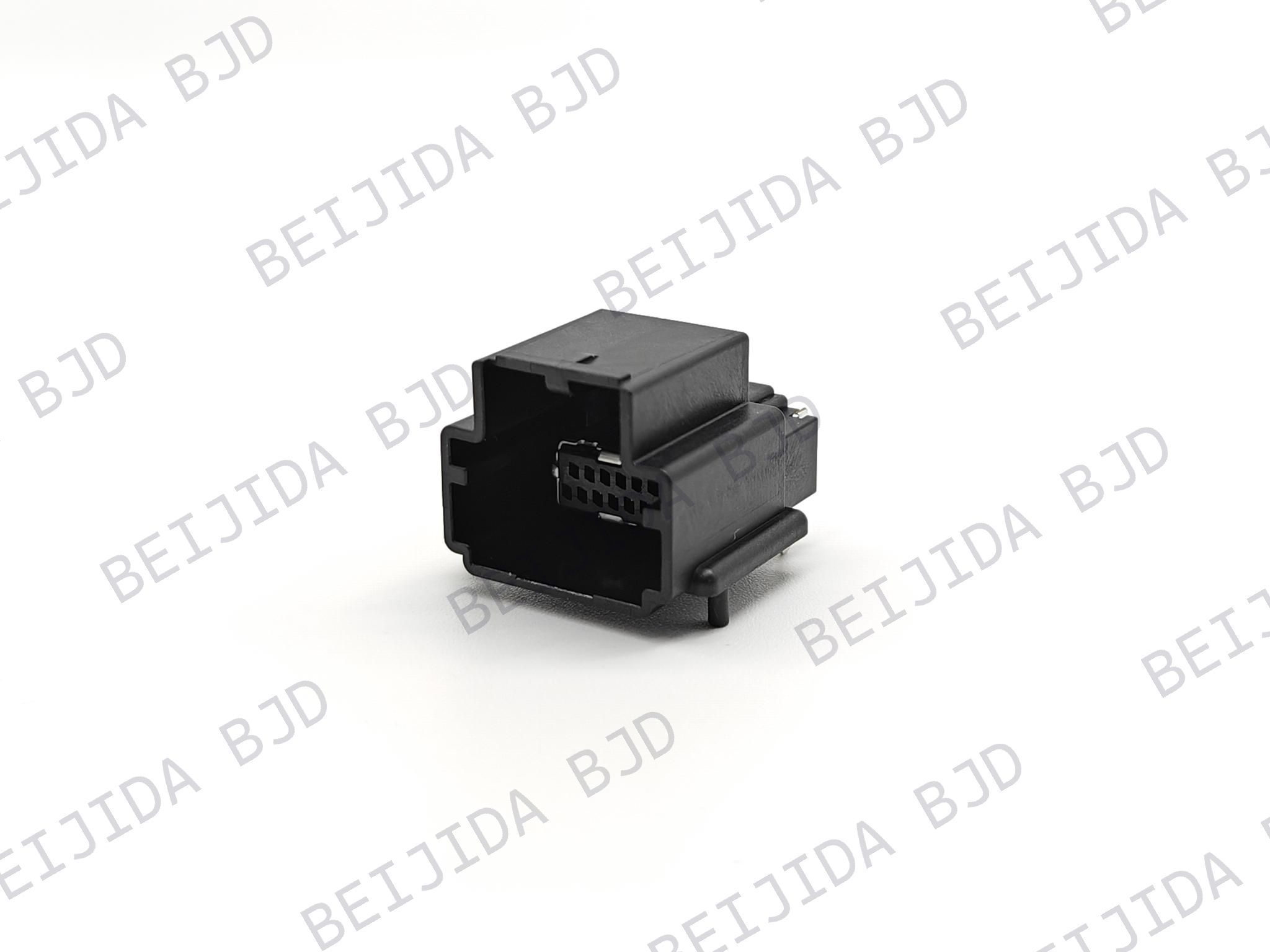
An industrial-grade board to board connector needs to maintain a stable connection while fitting the electrical requirements, mechanical structure, and operating conditions of the equipment.
For this reason, we consider several factors together when selecting a board to board connector, including pitch, mated height, floating range, electrical ratings, connection orientation, and operating temperature.
Industrial equipment can place different demands on PCB connections. In industrial control applications, stable connections are important for signal transmission, control, and equipment operation.
Our board to board connector solutions cover different pitches, floating ranges, connection orientations, and connector types. The range includes pitch options of 0.4 mm, 0.5 mm, 0.635 mm, 0.8 mm, and 3.5 mm.
Reliability depends on whether the connector matches the actual application.
Pitch, pin count, mated height, electrical ratings, and connection orientation all affect the final design. When PCB alignment is also a concern, the floating range becomes an important part of connector selection.
A connector can meet the electrical requirements and still be unsuitable if its height or orientation does not match the PCB layout.
That is why we offer straight, right-angle, and vertical connection options across our board to board connector range. Selecting the right configuration helps the connector fit naturally into the overall PCB assembly.
Once the application requirements are clear, the next step is to match the connector specifications. Each parameter affects a different part of the design, so choosing a connector by pitch alone is rarely enough.
Pitch determines the spacing between contacts, while pin count determines how many electrical connections the connector can provide.
Our range includes fine-pitch options down to 0.4 mm, as well as a 3.5 mm solution. This gives engineers more flexibility when balancing PCB space, connection density, and electrical requirements.
Mated height determines the spacing between the connected PCBs. It becomes especially important when the connector is installed inside a compact enclosure or multi-board assembly.
Connection orientation also needs to match the available PCB space. Straight, right-angle, and vertical configurations provide different layout possibilities for different equipment structures.
PCB alignment is not always perfect during assembly. When two boards require positional compensation, a floating board to board connector can provide additional flexibility.
Our product range includes floating options with XY ±0.4 mm, ±0.5 mm, ±0.6 mm, ±0.7 mm, and ±0.8 mm ranges, as well as X/Y/Z ±1.0 mm.
The required floating range depends on the mechanical tolerance of the assembly.
For applications that require movement in multiple directions, an X/Y/Z ±1.0 mm floating range can provide compensation along three axes. Other designs offer different XY floating ranges to suit specific PCB alignment requirements.
The right choice depends on the actual tolerance of the assembly rather than simply selecting the largest available range.
A suitable floating structure gives the mating system additional room to accommodate PCB positioning differences.
This can be particularly useful when multiple PCBs need to be connected within the same equipment and the assembly requires some positional tolerance. It can also make the connection more adaptable to the mechanical conditions of the final product.
Mechanical fit is only one part of connector reliability. The connector also needs to handle the required current and voltage within its specified operating conditions.
Different equipment designs require different electrical performance.
Our board to board connector range includes configurations with rated current up to 30 A and rated voltage up to 400 V AC/DC. Some configurations also provide a withstand voltage of 1000 V AC/min.
These specifications show why engineers need to consider the complete electrical requirement rather than selecting a connector based only on physical dimensions.
For lower-current, higher-density board connections, the priorities can shift toward pitch, pin count, mated height, and PCB layout.
Our range includes configurations with a 0.8 mm pitch, 120 positions, and a 5 mm mated height, as well as other combinations for different PCB designs.
The difference between these configurations shows why connector selection should follow the actual circuit requirements.
Electrical and mechanical requirements do not exist separately from the working environment. Temperature is another important specification when matching a connector to industrial equipment.
Our board to board connector range includes operating temperature specifications such as −40°C to +105°C and −40°C to +125°C.
This difference matters when the connector needs to operate in equipment with higher thermal requirements.
Temperature should be checked alongside current, voltage, insulation, mechanical structure, and PCB layout.
Looking at these specifications together provides a more practical basis for selecting an industrial-grade board to board connector.
The best connector is not necessarily the one with the highest individual specification. It is the one whose specifications match the equipment.
Fine-pitch options such as 0.4 mm, 0.5 mm, and 0.635 mm can support compact board layouts.
The required pin count and mated height should then be checked against the available PCB space. Our product range provides multiple combinations to accommodate different board designs.
A floating board to board connector is worth considering when the PCB assembly requires positional compensation.
The appropriate floating range should be selected according to the actual X, Y, or Z tolerance of the assembly.
When power requirements are higher, the connector needs an electrical rating that matches the circuit.
Our range includes board to board connector configurations supporting up to 30 A rated current and 400 V AC/DC rated voltage, providing options for applications with greater power requirements.
We develop connector solutions for industrial control and other applications where electrical and mechanical requirements need to work together.
Our portfolio covers FPC/FFC, RF, board-to-board, wire-to-board, I/O, and high-speed connectors. BJD was established in 2004 and currently has more than 600 team members and more than 60 product series. You can also learn more about our connector manufacturing capabilities.
We provide different pitches, floating ranges, connection orientations, and connector types, giving engineers more options when matching a connector to their PCB design.
This range allows us to support different combinations of board spacing, PCB layout, electrical requirements, and mechanical tolerances without relying on a single connector configuration.
We developed floating board-to-board products in 2015. This experience supports our approach to applications where PCB alignment and mechanical tolerance need to be considered together.
Floating technology is particularly useful when the PCB assembly requires additional positional compensation during mating. The required floating range should always be matched to the actual mechanical tolerance of the application.
We provide connector solutions for industrial control applications, where stable PCB connections are an important part of equipment design.
If you already have requirements for pitch, pin count, mated height, floating range, current, voltage, or operating temperature, you can talk to our connector team about the appropriate solution.
The reliability of an industrial-grade board to board connector comes from the right combination of specifications.
Before choosing a connector, consider:
Pitch and pin count
Mated height and connection orientation
Floating range
Rated current and voltage
Withstand voltage
Operating temperature
PCB alignment and mechanical requirements
When these factors are matched to the equipment, the connector becomes part of a stable and practical PCB connection rather than simply a component that joins two boards.