





2026-09-24
What Should You Look for in an FPC Connector Manufacturer?
View More


 FPC/FFC Connector
Board to Board Connector
Wire to Board Connector
Flexible Flat Cable
RF Connector
I/O Header
FPC/FFC Connector
Board to Board Connector
Wire to Board Connector
Flexible Flat Cable
RF Connector
I/O Header
Product
Automotive
Product
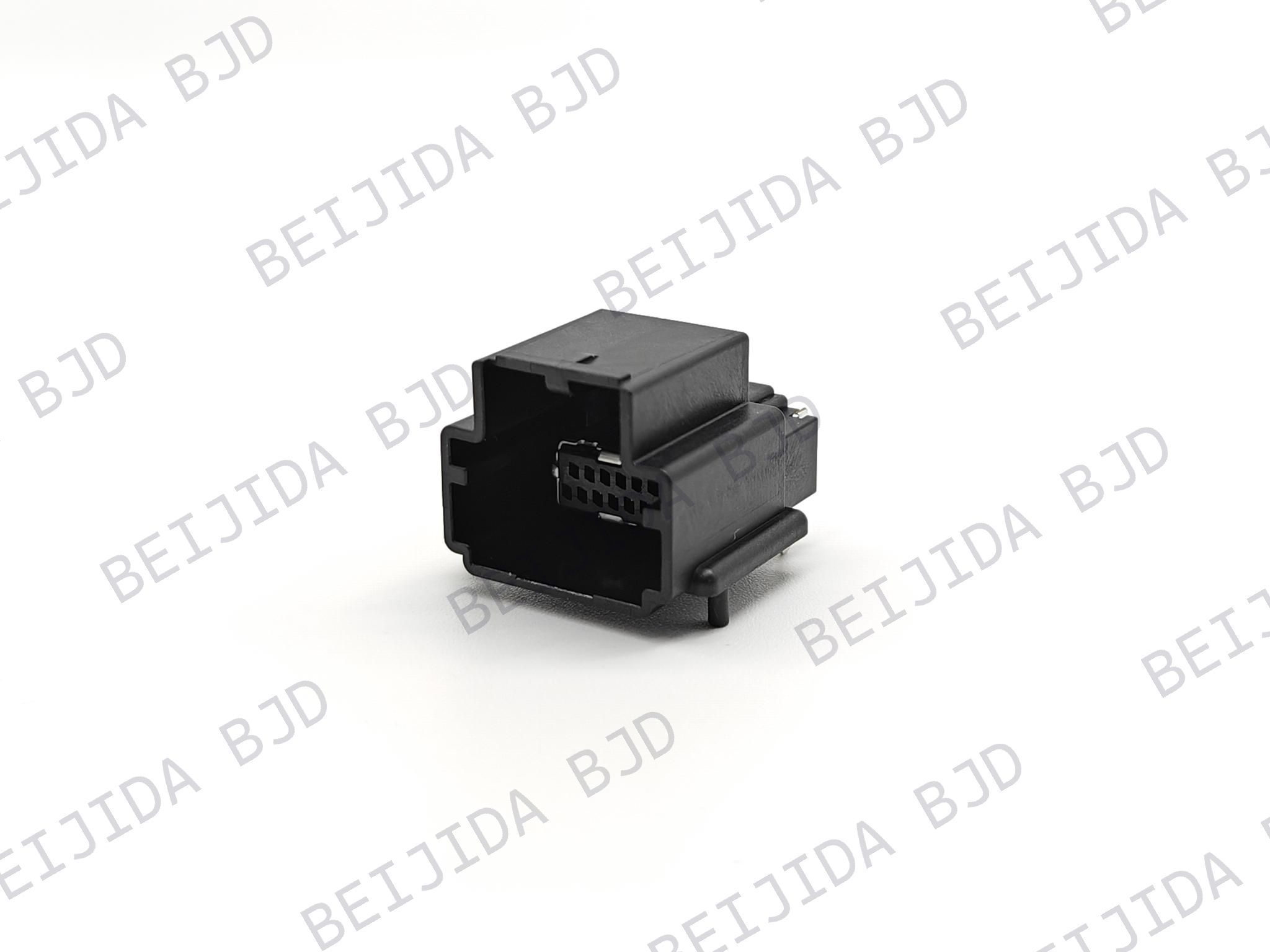 141091-211260
 Consult

Automotive camera designs continue to become more compact while handling increasingly demanding electronic requirements. Limited PCB space, board alignment, high-speed data transmission, and changing operating temperatures can all influence the choice of connector.
For engineers, choosing the connection needs to fit the mechanical structure, electrical requirements, available space, and assembly conditions of the camera module. Looking at these factors together makes it easier to find a suitable board to board connection for the overall design.
In a compact automotive camera module, the PCB connection needs to work within a defined mechanical space while maintaining the required electrical connection. Our board to board connectors are available in different configurations for compact PCB-to-PCB connections, giving engineers options when considering pitch, contact count, mated height, and other design requirements.
A board to board connector provides a direct connection between two PCBs. This can help keep the internal connection structure compact without introducing a separate cable assembly.
When space is limited, connector pitch and mated height become important because they affect how the connection fits within the PCB and housing structure.
The two mating PCBs may have some positional variation during assembly. If the connector can accommodate a defined amount of movement, engineers have more flexibility when matching the boards and surrounding mechanical structure.
This is particularly useful when connector selection needs to account for both PCB layout and assembly tolerance.
Once board alignment becomes part of the design, floating capability becomes an important specification. It defines how much positional variation the connector can accommodate during mating.
The 0.4 mm Floating Board-to-Board Series provides an XY floating tolerance of ±0.4 mm.
This allows the connector to accommodate a defined amount of horizontal misalignment between mating PCBs, giving engineers additional flexibility when the boards cannot be perfectly aligned during assembly.
Mated height also affects how a connector fits into a compact module.
The series has a 3 mm mated height with a 0.4 mm pitch, providing a compact PCB-to-PCB connection where both contact spacing and vertical space need to be considered.
Mechanical fit is only part of the selection process. Automotive camera systems also need to handle their required data transmission, so the connector's transmission capability needs to match the application.
The 0.4 mm Floating Board-to-Board Series supports transmission rates up to 8 Gbps.
This provides a defined high-speed transmission capability for PCB-to-PCB connections where the connector needs to support higher data rates.
Pitch affects how closely the contacts can be arranged within the connector.
A 0.4 mm pitch provides a compact contact arrangement, which can be useful when engineers need to accommodate multiple connections within a limited PCB area.
While board to board connectors handle compact PCB-to-PCB connections, automotive camera modules may also require a dedicated RF connection for high-frequency signal transmission. This is where an SMB connector can complement the camera module's internal connection architecture.
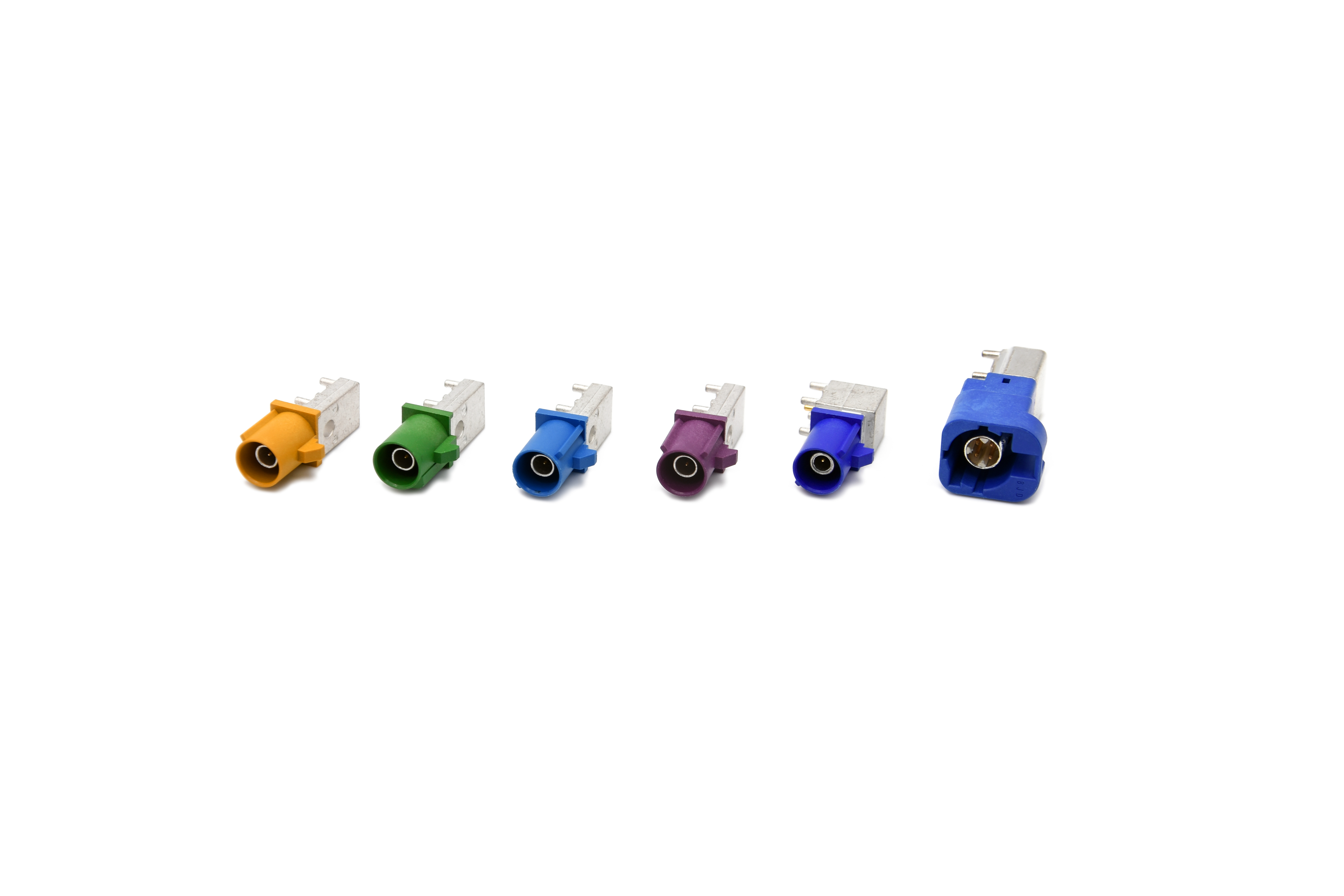
Our SMB 141131X Series Connectors is designed for RF links such as high-definition automotive cameras. The series combines a floating FAKRA/SMB male PCB connector, FAKRA sealed adaptor, and SMB female cable connector, allowing the RF connection to be integrated into a compact camera module structure.
The floating PCB connector is particularly relevant when the camera assembly requires some flexibility in PCB positioning. The series operates from -40°C to +105°C, with a maximum rated voltage of 60 V AC/DC and maximum rated current of 1 A AC/DC. These specifications give engineers defined electrical and environmental parameters to consider when evaluating the connector for an automotive camera application.
The SMB solution and board to board connector therefore serve different connection requirements within the same camera architecture: the board to board connector focuses on compact PCB-to-PCB interconnection, while the SMB connector provides an RF connection path for camera signal transmission.
Once the basic connection requirements are clear, engineers can narrow the selection by matching contact count, mounting method, mated height, and electrical ratings with the PCB design.
Different camera module designs may require different numbers of contacts.
The 0.4 mm Floating Board-to-Board Series is available with 20, 30, 40, 50, and 60 contacts. These options allow the contact count to be matched more closely with the requirements of the PCB connection.
The connector's mounting method and connection orientation also need to fit the PCB manufacturing process and mechanical layout.
The series uses SMT mounting with a vertical connection orientation. Together with its 3 mm mated height, these specifications provide clear mechanical requirements for PCB design.
Temperature is another factor that should be considered early in connector selection. Automotive electronic modules may operate across a broad temperature range, so the connector's specified operating conditions need to match the intended application.
The 0.4 mm Floating Board-to-Board Series supports an operating temperature range of -40°C to 125°C.
This gives engineers a defined temperature range when considering the connector for automotive electronic applications.
The connector also needs to match the electrical requirements of the PCB connection.
The series has a rated current of 0.4 A and a rated voltage of 50 V. These specifications should be checked against the actual electrical requirements before final connector selection.
Automotive camera modules are part of a broader automotive electronics environment, where different applications can require different connector structures and specifications.
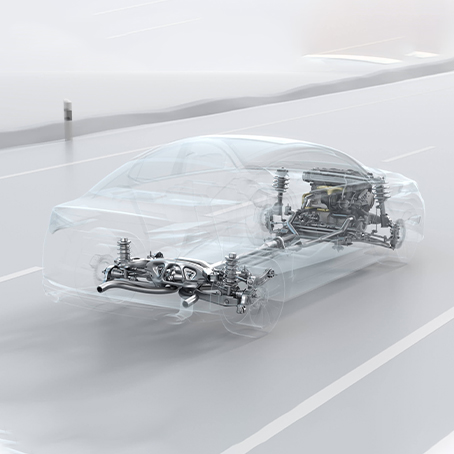
Our automotive electronics solutions cover connector requirements across automotive electronic applications, including HUD, infotainment systems, automotive lamps, and instrument clusters.
This allows us to consider connector selection according to the actual mechanical and electrical requirements of each application rather than relying on a single connector configuration.
For automotive camera modules, connector selection may involve more than one type of connection. The 0.4 mm Floating Board-to-Board Series addresses compact PCB-to-PCB interconnection with a 0.4 mm pitch, 3 mm mated height, XY ±0.4 mm floating tolerance, and transmission rates up to 8 Gbps. An SMB connector can complement this connection by providing an RF interface for the camera's high-frequency signal path.
Considering these connection requirements together helps engineers determine whether the camera module needs a board to board connector, an SMB RF connector, or a combination of both.
The right connector depends on the complete design rather than one specification alone. Mechanical dimensions, PCB layout, contact requirements, transmission rate, temperature range, and assembly conditions should all be considered together.
Before selecting a board to board connector, consider:
Pitch
Contact count
Mated height
Floating tolerance
Transmission rate
Operating temperature
Rated current
Rated voltage
Mounting method
Connection orientation
Matching these requirements first can make it easier to identify the right connector configuration for the camera module.
If your automotive camera requires a compact PCB-to-PCB connection, we can help you review the relevant mechanical and electrical requirements and identify a suitable configuration.
You can contact our connector team to discuss your automotive camera connector requirements, PCB design, and product selection.