





2026-09-24
What Should You Look for in an FPC Connector Manufacturer?
View More


 FPC/FFC Connector
Board to Board Connector
Wire to Board Connector
Flexible Flat Cable
RF Connector
I/O Header
FPC/FFC Connector
Board to Board Connector
Wire to Board Connector
Flexible Flat Cable
RF Connector
I/O Header
Product

Automotive
Product
 141091-211260
 Consult

Energy storage systems depend on reliable connections between battery packs, control units, BMS assemblies, and other electronic modules. The right wire to board connector can simplify PCB integration while keeping wiring organized and secure.
For different energy storage designs, connector requirements can vary in pin count, pitch, mounting direction, current capacity, and mechanical configuration. Our wire to board connector solutions cover multiple configurations, making it easier to match the connector with the actual PCB and wiring requirements.
The connector needs of an ESS are closely related to the function of each assembly. Instead of using one connector configuration throughout the system, we consider where the connection is made and what the circuit requires.
The BMS monitors and protects battery packs, so its PCB connections need to accommodate the required signal and power circuits.
A wire to board connector provides a direct interface between the PCB and wiring harness, helping keep multiple circuits organized within a compact assembly.
Controllers handle functions such as battery monitoring, charging, discharging, and system communication. Inverters are another important part of the ESS architecture.
These assemblies can have different PCB layouts and connection requirements, so connector pitch, pin count, orientation, and electrical ratings need to be considered together.
For battery energy storage systems, stable connections are needed between battery packs, management systems, and controllers. We provide connector solutions for these ESS assemblies, with configurations selected according to the requirements of different connection points.
Once the application is clear, the next question is how the connector should fit the PCB. Space, wiring direction, and circuit density all influence the right configuration.
A single-row connector can be suitable when the number of circuits is limited. A double-row design can accommodate more contacts within a compact footprint.
Our wire to board range includes both single-row and double-row configurations, as well as different pitch options such as 1.0 mm, 1.25 mm, 1.8 mm, 2.0 mm, 2.2 mm, 2.5 mm, 2.54 mm, and 3.5 mm.
The mating direction should match the available space and cable routing inside the equipment.
Vertical, horizontal, and horizontal/right-angle configurations are available across the range, allowing the connector structure to follow the PCB layout rather than forcing the PCB design around the connector.
After determining the connector structure, electrical requirements become the key selection criteria. Current, voltage, pin count, and temperature range should be checked together rather than considered separately.
For applications where the connector carries higher current, the rated current per pin needs to match the actual circuit requirement.
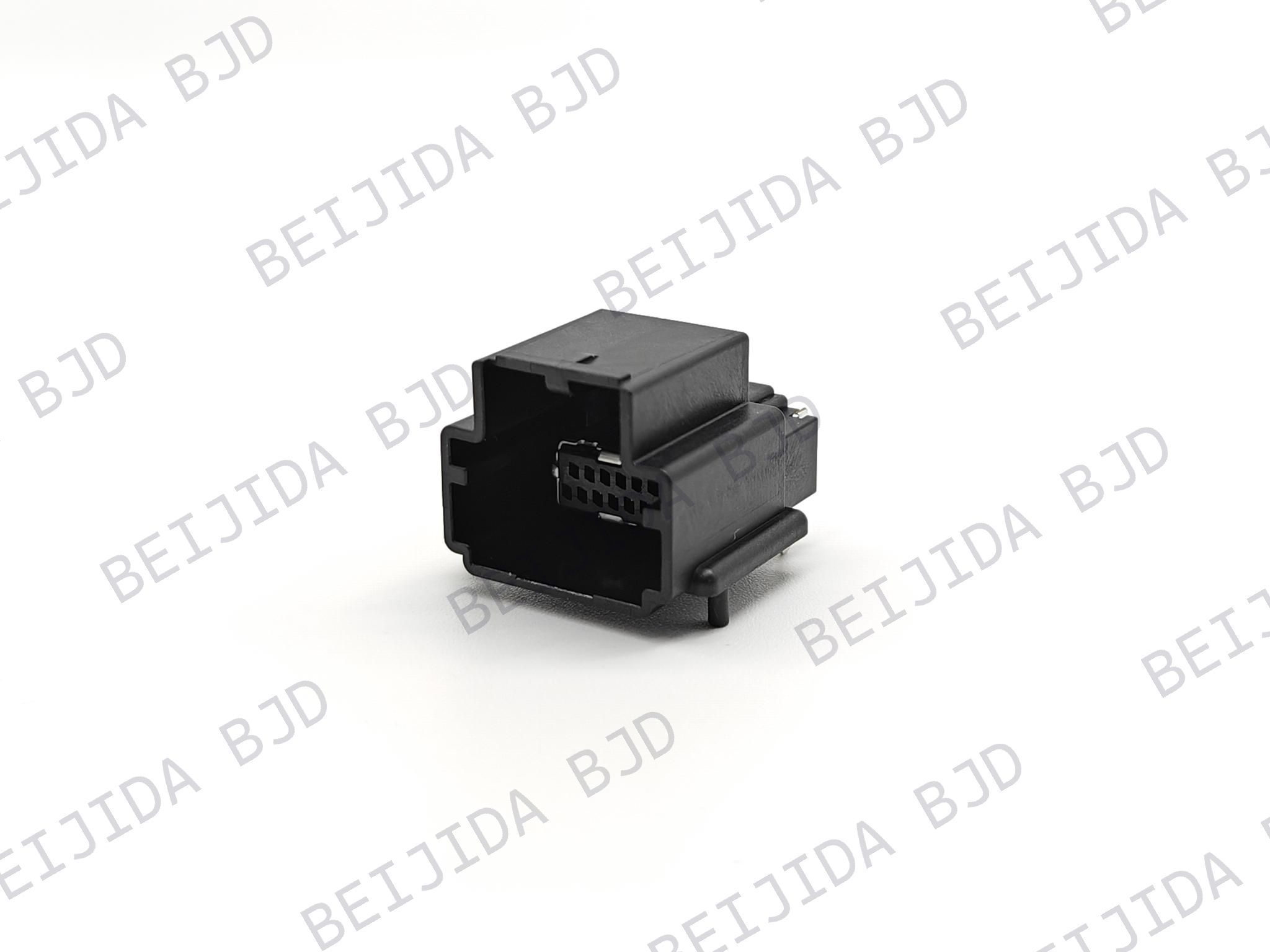
Our 141116-21XX10 board-side header provides a rated current of 3 A AC/DC max per pin and a withstand voltage of AC 500 V/min. These figures provide clear reference points when matching the connector to the circuit design.
Pin count determines how many circuits can be accommodated, while pitch directly affects PCB layout and connector density.
The 141116-21XX10 uses a 2.0 mm pitch and double-row structure, with 8, 12, 16, 20, 24, 28, 32, or 40 pins available. This gives engineers several pin-count options while keeping the same 2.0 mm pitch.
Electrical specifications are only part of the selection process. When several connectors are installed in the same equipment, correct mating and connector identification also matter.
The 141116-21XX10 uses KEY C coding. Keying helps distinguish connector interfaces and reduces the risk of incorrect mating during assembly.
The same connector is equipped with CPA (Connector Position Assurance). This adds a mechanical assurance feature to the mating structure and helps maintain the intended connector position after assembly.
Temperature conditions can change across different ESS assemblies, particularly where connectors are installed close to heat-generating components.
For the 141116-21XX10, the specified operating temperature range is -40°C to 125°C.
This gives engineers a defined temperature range to compare with the expected operating conditions of the target ESS assembly.
The connector should not be selected from electrical specifications alone. The expected temperature, installation location, PCB arrangement, and mating structure should all be considered before finalizing the connector.
A practical selection process helps avoid choosing a connector based on only one specification. We recommend narrowing the options according to the actual application requirements.
Check:
Rated current per pin
Withstand voltage
Number of circuits
Operating temperature
Then determine:
Required pitch
Pin count
Number of rows
Mating direction
Available PCB space
Finally, check:
Keying requirements
CPA requirements
Connector mating structure
Cable routing
Assembly space
By checking these requirements together, engineers can move from a general connector requirement to a configuration that fits the actual ESS design.
For energy storage applications, connector selection often involves more than choosing a standard pin count. The connector has to fit the electrical, PCB, and assembly requirements of the complete system.
Our wire to board connector range includes different product series, pitches, row configurations, mating orientations, and keying options. This allows us to support different PCB layouts and wiring structures without applying the same connector configuration to every ESS design.
Our energy storage solutions cover controllers, BMS, battery energy storage systems, and inverters. The 141116-21XX10 is among the connector solutions recommended for these applications, giving engineers a practical option when its specifications match the circuit and mechanical requirements.
If your ESS project has specific requirements for current, pin count, pitch, coding, temperature range, or PCB integration, our team can help evaluate the suitable configuration.
You can contact BJD for connector selection support. We provide product selection and custom connector support, and our team will contact you within 2 working days after an inquiry is submitted.
The best connector is the one that fits the complete application rather than a single specification.
Before making a final choice, confirm:
What ESS assembly will use the connector?
How many circuits are required?
What current and voltage does each circuit require?
What pitch and pin count fit the PCB?
Is a single-row or double-row structure more suitable?
Which mating direction fits the available space?
Is keying or CPA required?
What operating temperature should the connector support?
Once these requirements are clear, we can help you narrow down the appropriate wire to board connector configuration for your energy storage system.